Businesses in 2026 are under increasing pressure to work faster, protect sensitive information, support flexible work environments, and manage growing volumes of data. Yet many organizations still depend on paper records for important contracts, invoices, employee files, customer information, and operational documents.
Document digitization provides a practical way to move from traditional paper-based processes to organized digital records. By converting physical documents into digital files and making information easier to search, access, share, and manage, businesses can improve everyday operations while creating a stronger foundation for future growth.
The shift from paper to digital is no longer simply about reducing paper consumption. It is about creating faster workflows, improving document security, supporting remote teams, and making business information more useful. For organizations looking to modernize their operations in 2026, document digitization can be an important step toward a more efficient workplace.
What Is Document Digitization?
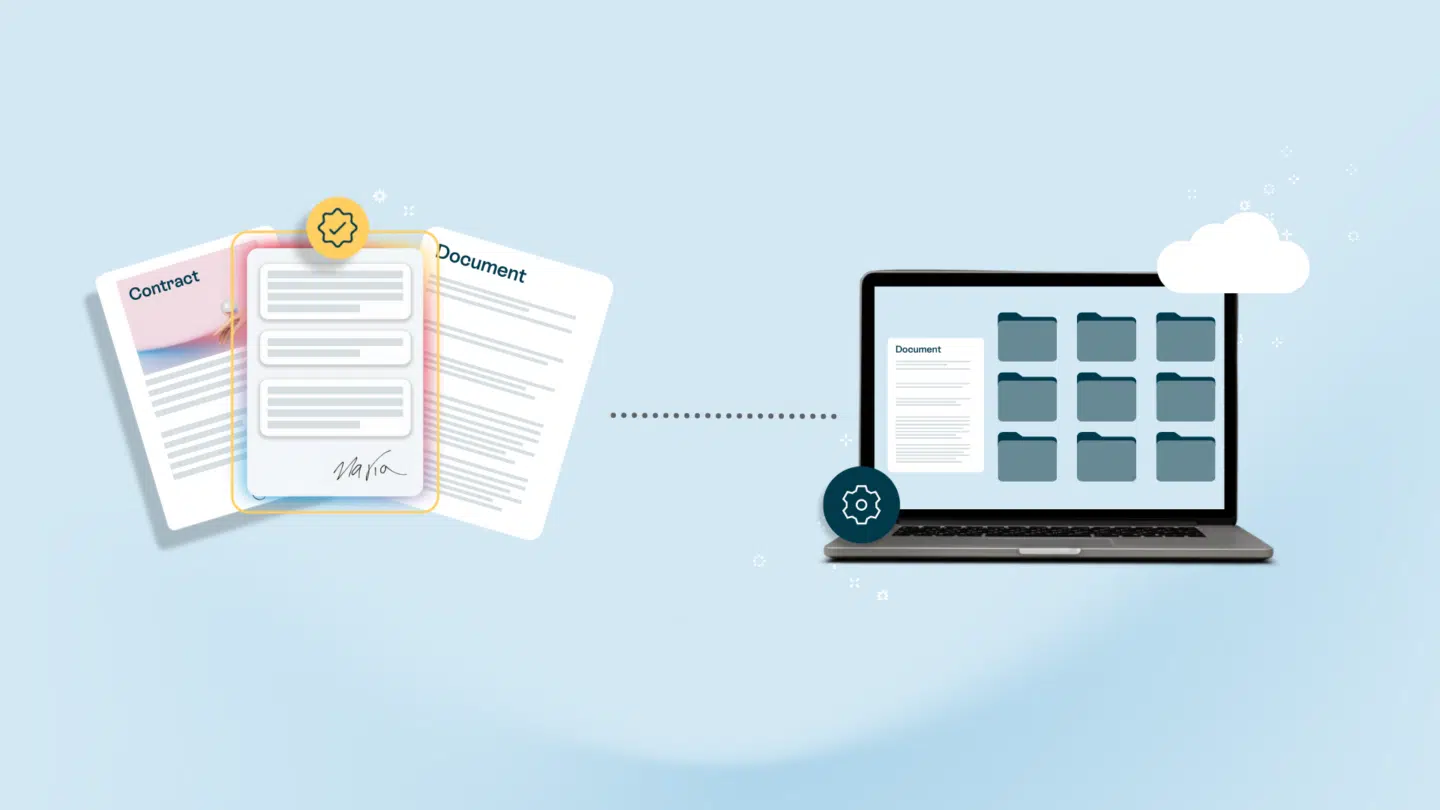
Document digitization is the process of converting physical documents, such as paper records, forms, contracts, invoices, and reports, into digital formats that can be stored and accessed electronically. This process can also support state inter-agency file sharing by making important records easier for authorized departments and agencies to access, organize, and exchange digitally.
However, document digitization involves more than simply scanning a piece of paper. A successful project also considers how documents will be named, categorized, stored, accessed, protected, and eventually archived or deleted according to organizational policies.
Common examples of documents businesses may digitize include:
- Contracts and agreements
- Invoices and receipts
- Employee records
- Customer files
- Financial documents
- Forms and applications
- Historical records
- Technical documents
- Legal paperwork
It is also useful to understand the difference between digitization, digitalization, and digital transformation. Digitization generally refers to converting information from a physical format into a digital one. Digitalization involves using digital information to improve existing processes. Digital transformation goes further by redesigning business operations around digital technologies.
Why Is Document Digitization Essential in 2026?
The amount of information businesses create and manage continues to grow. At the same time, employees increasingly expect quick access to information and the ability to work from different locations. Paper-based systems can make these expectations difficult to meet.
Document digitization can help organizations address several common challenges while improving the way employees interact with business information.
Faster Access to Business Information
Finding a document in a physical filing cabinet can take several minutes, particularly when employees are unsure where it was stored. When thousands of records are involved, this small delay can become a significant productivity problem.
A reliable inter-agency file transfer solution can help organizations move important information digitally while reducing the time spent locating and sharing physical documents.Faster access can be particularly useful for departments such as:
- Accounting and finance
- Human resources
- Legal
- Customer service
- Operations
- Administration
When employees can quickly locate the information they need, they can spend more time on productive tasks instead of searching for records.
Reduced Storage and Operational Costs
Physical documents require physical storage. Businesses may need filing cabinets, storage rooms, shelving, off-site document storage, and supplies to maintain paper records. As the volume of paperwork grows, these requirements can become expensive.
Digitizing records can reduce the need for extensive physical storage. Businesses may also reduce expenses associated with paper, printing, photocopying, physical filing, and document transportation.
The savings are not limited to physical supplies. Employee time also has a cost. When staff members spend less time filing, locating, copying, and manually distributing documents, organizations can use their workforce more efficiently.
Improved Document Security
Paper documents can be misplaced, damaged, stolen, or accessed by individuals who should not have them. A document left on a desk or in an unlocked filing cabinet can expose sensitive information.
Digital document systems can provide additional security controls, depending on the technology used. Organizations may be able to establish user permissions, authentication requirements, access restrictions, audit trails, and backup procedures.
For sensitive records, businesses should also consider encryption, secure storage, regular backups, and appropriate retention policies. Digitization does not automatically make information secure, but a well-designed digital document management system can provide more control than an unmanaged paper archive.
Better Compliance and Record Management
Many businesses must maintain accurate records for operational, legal, contractual, or regulatory reasons. When documents are stored across multiple filing cabinets, offices, or locations, maintaining consistent records can become difficult.
Digital document management can make records easier to organize, retrieve, and track. Businesses can establish standardized naming conventions, retention schedules, access permissions, and audit processes.
When an audit or internal review requires a particular document, employees can potentially locate it much faster than they could through a manual paper search.
Organizations should still consult applicable legal or regulatory requirements before deciding how long records should be retained or when physical originals can be destroyed.
Improved Productivity and Workflow Automation
One of the most valuable benefits of digitization is the ability to connect documents with digital workflows. Instead of manually moving paperwork between departments, organizations can create processes that route digital documents to the appropriate people.
For example, an invoice can be digitized and routed to an accounting employee for review and approval. A digital form can be sent automatically to the appropriate department after submission.
OCR can also extract text from scanned documents, making information searchable and potentially allowing data to be integrated into other business systems.
The result can be fewer repetitive administrative tasks and more consistent workflows.
How Document Digitization Supports Remote and Hybrid Work
Remote and hybrid work have changed how employees access business information. When important records exist only in physical offices, employees working remotely may need someone at the office to locate, scan, and send documents manually.
Digitized documents can make approved information accessible to authorized employees regardless of where they are working. Teams can collaborate on documents without requiring physical copies to be transported between locations.
This can be particularly useful for businesses with multiple offices or distributed teams. Instead of maintaining separate physical files at different locations, organizations can create centralized digital repositories with appropriate access controls.
Remote access should always be implemented with security in mind. Strong authentication, permissions, secure connections, and monitoring can help reduce the risks associated with accessing sensitive information outside the office.
The Role of OCR in Document Digitization
Optical Character Recognition, commonly known as OCR, is an important technology in many document digitization projects. OCR analyzes text within scanned documents and converts it into machine-readable information.
Without OCR, a scanned document may essentially function like a digital photograph of a piece of paper. Employees may still need to manually read the document to find specific information. With OCR, text can become searchable. This makes it easier to locate names, dates, invoice numbers, contract terms, and other information within large collections of documents.
OCR can be particularly useful for:
- Invoices
- Contracts
- Receipts
- Application forms
- Historical archives
- Reports
- Customer records
OCR accuracy can vary depending on the original document quality, handwriting, fonts, layouts, and scanning conditions. Quality control is therefore an important part of the digitization process.
Common Documents Businesses Should Digitize
Not every paper document needs to be digitized at the same time. Businesses can prioritize records based on importance, frequency of use, sensitivity, and storage requirements.
Contracts and legal documents are often good candidates because employees may need to access them frequently and preserve them for specific periods.
Financial records, including invoices, receipts, and accounting documents, can also benefit from digital organization. Searchable records can make it easier for accounting teams to locate information during financial reviews. Human resources departments can digitize appropriate employee records, while customer service teams may benefit from organized digital customer documentation.
Historical and archived documents can also be strong candidates, particularly when physical deterioration makes preservation a concern. Before digitizing, businesses should identify which records are most valuable and determine whether original paper documents must be retained.
How to Start a Document Digitization Project
A successful digitization project starts with planning rather than immediately scanning every document in the office. Businesses should first determine what information they have, where it is stored, and which records should receive priority.
A practical process can include the following steps:
- Identify priority documents: Determine which records are frequently used, sensitive, or difficult to manage.
- Create an organization system: Establish consistent naming conventions, folders, categories, and metadata.
- Scan physical documents: Convert paper records into appropriate digital formats.
- Apply OCR when needed: Make documents searchable and easier to process.
- Store files securely: Use an appropriate document management or storage system.
- Set access permissions: Ensure only authorized users can access sensitive information.
- Establish backups: Protect digital records against accidental deletion, system failures, and other risks.
- Review the system regularly: Update processes as the organization and its document requirements change.
Starting with a smaller collection can allow a business to identify problems and refine its workflow before digitizing thousands of records.
Document Digitization vs. Document Scanning: What’s the Difference?
Document scanning and document digitization are related but not identical. Scanning generally refers to creating a digital image of a physical document. Digitization takes a broader approach by considering how those digital files will be organized, searched, accessed, secured, and managed.
For example, scanning 10,000 invoices and saving them with random filenames creates digital copies, but employees may still struggle to find the right invoice.
A more complete digitization process could involve:
- High-quality scanning
- OCR processing
- Consistent file naming
- Metadata creation
- Document classification
- Secure storage
- Search functionality
- Access controls
- Backup procedures
This distinction is important because simply replacing paper with image files does not necessarily solve the underlying document-management problem.
Key Challenges of Document Digitization
Although digitization offers significant benefits, businesses may encounter challenges during implementation. Large paper archives can take considerable time to process, particularly when documents are old, damaged, folded, or poorly printed.
Data security is another important consideration. Sensitive information must be handled carefully throughout scanning, processing, storage, and disposal. Businesses should establish clear procedures for protecting documents before beginning a large-scale project.
Initial costs can also be a concern. Depending on the size of the project, organizations may need scanning equipment, software, storage infrastructure, professional services, or additional staff time.
Employee adoption is another factor. A new digital document system will only be effective if employees understand how to use it. Training, clear procedures, and consistent file-management practices can help ensure that digitization delivers long-term value.
How to Choose a Document Digitization Service
For organizations with large volumes of records, working with a professional document digitization service can simplify the process. However, businesses should evaluate providers carefully before handing over important or confidential documents.
Consider factors such as:
- Experience with similar document types
- Scanning and OCR capabilities
- Document security procedures
- Quality-control processes
- File formats and delivery options
- Data privacy practices
- Storage and integration capabilities
- Scalability
- Turnaround time
- Document handling and transportation procedures
A good provider should be able to explain how documents will be collected, scanned, processed, quality-checked, stored, and returned or securely disposed of where permitted.
It is also important to discuss confidentiality and security requirements before beginning the project. Businesses should make sure the service provider can meet their specific organizational and regulatory obligations.
Frequently Asked Questions
What is document digitization?
Document digitization is the process of converting physical documents into digital files and organizing them so they can be stored, searched, accessed, and managed electronically. It can include scanning, OCR, classification, indexing, and secure digital storage.
Why should businesses digitize documents in 2026?
Businesses can benefit from digitization through faster document access, reduced physical storage, improved workflows, stronger access controls, easier collaboration, and better support for remote and hybrid work.
What is the difference between document scanning and digitization?
Scanning creates a digital image of a physical document, while digitization involves a broader process of converting, organizing, indexing, securing, and managing documents digitally. Digitization may also include OCR and workflow integration.
How does OCR help with document digitization?
OCR converts text within scanned documents into machine-readable text. This allows employees to search digital records for words, names, numbers, and other information instead of manually reviewing every scanned page.
Is document digitization secure?
Digital documents can be protected using access permissions, authentication, encryption, backups, monitoring, and other security controls. However, digitization itself does not guarantee security. Businesses should implement appropriate security measures based on the sensitivity of their information.
Conclusion
Moving from paper to digital is becoming an increasingly important step for businesses that want to improve efficiency and modernize their operations in 2026. Document digitization can make information easier to find, reduce physical storage requirements, support remote work, improve workflows, and provide greater control over business records.
Ready to move your business from paper to digital? Professional document digitization can help you convert, organize, and manage your records more efficiently. Start by assessing your current paper archive and identify the documents that would benefit most from digitization. Contact us today to discuss your document digitization needs and discover how we can help turn your physical records into secure, accessible, and searchable digital information.